
Plan executive travel around the time you need to be ready for business. A confirmed flight and a car booking are only part of the job. You also need realistic connections, clear costs and someone who can act when plans change.
Whether you are travelling from Oxfordshire to a London meeting or heading overseas, these decisions help protect your schedule and leave you better prepared when you arrive.
Build the itinerary around your meeting
Start with the appointment time, venue entrance and any visitor registration requirements, then work backwards. Allow time to find reception, clear building security and prepare before the meeting begins.
For airport departures, use your airline’s recommended arrival time and check-in deadlines to establish when you must reach the terminal. Add the road journey and a separate allowance for disruption. Avoid treating a navigation estimate as a guaranteed arrival time.
A morning journey towards London may need different planning from the same route late in the evening. Review roadworks, major events and expected traffic for your actual travel window.
If an early meeting follows a long journey, consider arriving the previous evening. Compare the hotel cost with the consequences of a missed appointment or an exhausted start.
Compare the complete journey before choosing transport
Compare rail, air and road options from your starting address to the meeting venue. Include station or airport transfers, connection time and the final walk, alongside the headline journey duration and fare.
A direct train may suit a city-centre appointment. A pre-booked car may be more practical for several addresses, heavy equipment or a venue with limited public transport. If you need accommodation, check its position against the following morning’s appointment. A cheaper room further away can add another transfer and an earlier start.
Arrange every ground transfer before departure
Map the entire journey, including travel between the airport, hotel, meeting venue and return departure point. An unplanned connection can undermine an otherwise carefully organised day.
For an airport collection, provide your flight number, arrival date, terminal and a mobile number that will work after landing. Agree on the meeting point and establish how the driver will contact you. Flight arrival and passenger readiness are different times: passport control and baggage reclaim still need an allowance.
Britannia Cars’ airport transfer services include flight tracking and meet-and-greet options. Confirm the arrangements for your booking, including the waiting allowance and what happens if baggage collection takes longer than expected.
Choose the vehicle around passengers and luggage
Give the operator the actual passenger count and a realistic luggage description. Mention large suitcases, presentation equipment and anything that cannot be folded or stacked. Passenger capacity alone does not establish whether everything will fit comfortably.
For solo travel, consider legroom and the length of the journey. For colleagues travelling together, confirm that the vehicle accommodates both the group and their bags without compromising comfort.
Britannia Cars’ vehicle range includes executive saloons and people carriers, with availability and luggage arrangements confirmed when booking. Discuss accessibility needs directly, including any mobility equipment and assistance required when entering or leaving the vehicle.
Agree the full cost and booking conditions
Request a written quote that makes the scope of the journey clear. Establish whether it includes parking, airport access charges, tolls and any applicable tax. Ask how additional stops, extended waiting or a changed destination would affect the price.
Check the cancellation deadline and amendment process before confirming. A low initial fare offers limited value if your meeting is likely to move and changes are expensive.
For company travel, obtain approval under your employer’s policy and supply the correct billing details or purchase order reference. Britannia Cars’ corporate travel service offers monthly invoices, journey logs and cost centre allocation. These features help finance teams connect transport spending with the relevant department or assignment.
Check overseas requirements and insurance early
Before an international trip, check the destination’s current entry requirements against your nationality, passport and planned activities. Verify any visa or travel authorisation requirements, including those for transit stops. Ask your employer to confirm the permissions appropriate to the work you intend to undertake.
Check that your travel insurance covers the destination, trip duration and business activities. Review cancellation, medical assistance and equipment cover rather than assuming every work-related loss is included.
Keep essential booking information and emergency contacts accessible offline. Store copies of sensitive documents securely, following your employer’s policies, and know how to reach assistance if your phone is lost or unavailable.
Decide how you will use the journey
Choose tasks that suit travel conditions. Reviewing a briefing or preparing questions may be practical; a confidential negotiation or connection-dependent presentation needs more careful scheduling.
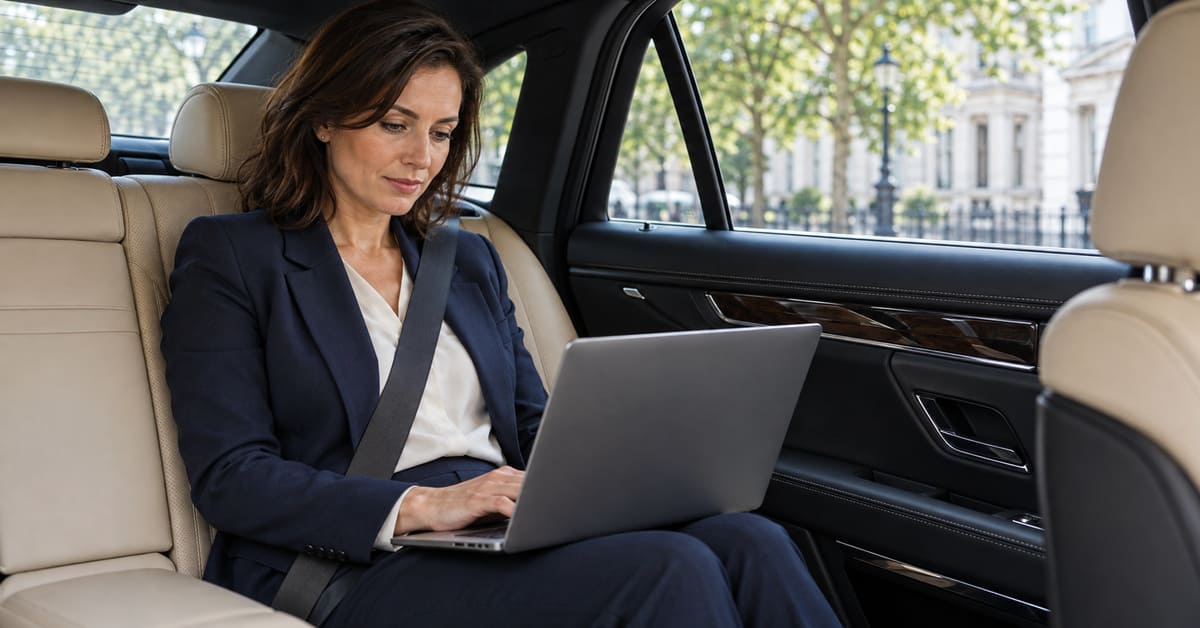
Britannia Cars lists in-car Wi-Fi and charging ports among its business travel facilities. Confirm any essential requirement for the vehicle being booked, carry the right cable and download important files before departure.
Follow your organisation’s security rules when connecting devices or handling client information. Keep screens and paperwork out of casual view, and save sensitive conversations for a suitable private setting.
Leave some travel time free of work. After an early start or a demanding meeting, a quiet journey may be more useful than another hour of emails.
Give someone responsibility for changes
Choose one person to manage amendments, whether that is you, an assistant or your company’s travel coordinator. Everyone involved should know whose instructions take priority.
Save the transport operator’s contact details separately from the booking confirmation. Agree how urgent changes should be communicated and who can authorise extra spending outside normal office hours.
For a critical appointment, identify a workable alternative before travelling. That might mean an earlier departure, a different route or the option to join remotely if disruption becomes severe.
If several colleagues are travelling, appoint a group contact and circulate one current itinerary. Replace outdated versions so different passengers do not follow conflicting collection times.
Frequently asked questions
How far ahead should I book executive travel?
Book once your itinerary is sufficiently firm. Allow more notice for larger groups, specialist requirements and busy dates, then reconfirm details before departure.
Can I book a chauffeur for a visiting client?
Yes. Share the guest’s name, contact details and agreed pickup instructions, with their permission. Confirm who receives booking updates and who handles payment.
Should I book separate transfers or a car for the day?
Request quotes for both if you have several appointments. Compare the included hours, waiting arrangements and flexibility against the gaps between meetings.
What should I carry in my hand luggage?
Keep essential documents, medication, chargers and meeting materials accessible. Check current airline and airport restrictions before packing liquids, batteries or specialist equipment.