

The easiest way to organise group pickups from different addresses is to agree the arrival deadline first, collect everyone's details, then ask your transport provider to check the route and collection times. Booking a vehicle is only part of the job. Each extra stop needs time for boarding, luggage and getting back onto the road.
A clear plan gives every passenger a specific place and time to be ready, while leaving enough room for ordinary delays.
1. Collect Every Address in One Pickup List
Ask each household or passenger group to provide:
- The full address, including house number or building name and postcode.
- The number of adults and children joining there.
- A contact name and mobile number.
- The number and approximate size of bags.
- Any child-seat, mobility or boarding requirements.
Add useful access instructions, such as a hotel entrance, gate code or driveway location. A postcode alone may leave the driver searching several buildings.
Check whether collection outside the property is practical. If access is narrow or stopping is restricted, ask the provider to agree to a suitable nearby point. Make sure passengers can reach it comfortably with their luggage. Share precise household details with the organiser and booking team; the wider group usually only needs its own instructions.
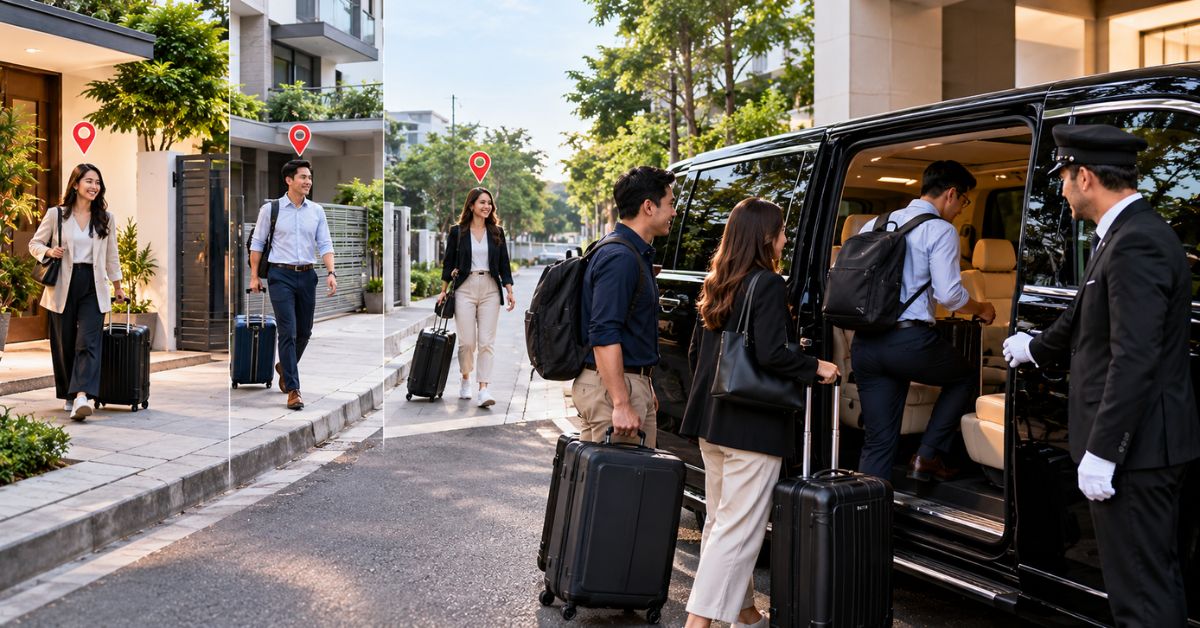
2. Match the Vehicle to People and Luggage
Confirm the total travelling together after the final pickup. Include children in that total, and describe bulky items separately: pushchairs, golf bags and walking aids can change the space required.
Britannia Cars' group hire service advertises an executive MPV for up to seven passengers. However, a seat count does not confirm whether your particular luggage load will fit. Send the complete list before agreeing on the vehicle.
Review the available vehicle options and ask the team to confirm a suitable arrangement. For mobility requirements, explain the assistance needed and whether equipment folds. Do not assume an MPV provides wheelchair access. Confirm any required child seats and who will supply them.
3. Choose a Pickup Order That Avoids Backtracking
Put all addresses and the destination on one route before assigning times. The aim is to move steadily towards the destination, rather than crossing the same town repeatedly.
Starting with the furthest household can work, but it is not a fixed rule. One-way streets, access restrictions and peak-time congestion may make another order more sensible. Ask the booking team to review your proposed sequence.
If one address creates a substantial detour, compare doorstep collection with a shared meeting point. Consider the time and effort of reaching that point, especially for passengers carrying bags or travelling with children. If addresses are widely scattered, ask whether separate vehicles would make the overall journey more manageable.
4. Work Backwards From the Arrival Deadline
Use the time everyone needs to be at the destination entrance. For an event, allow for the walk from the drop-off point. For an airport transfer, give the booking team the flight details, terminal and required airport arrival time.
Build the schedule from four parts: driving between addresses, boarding at each stop, the final drive and a contingency allowance. Keep boarding time separate from traffic allowance; otherwise, loading bags can use up your margin before the main journey begins.
Here is an illustrative schedule for three addresses, with everyone required at the destination entrance by 10:00:
| Stage | Planned time |
|---|---|
| Board at Address A | 08:15–08:20 |
| Drive to Address B | 08:20–08:35 |
| Board at Address B | 08:35–08:40 |
| Drive to Address C | 08:40–08:55 |
| Board at Address C | 08:55–09:00 |
| Drive to destination | 09:00–09:35 |
| Unload and walk to entrance | 09:35–09:45 |
| Remaining contingency | 15 minutes |
These are example allowances, not route estimates or guaranteed timings. Five minutes per stop may be insufficient for some groups. Ask the provider to adjust boarding time and contingency to your passengers, route and departure time.
5. Give Everyone Clear Instructions and One Contact
Choose one organiser to manage changes with the booking team. Keep a backup contact available in case that person cannot answer.
Send each household its collection point, pickup time, agreed ready-by time and contact number. Make the distinction clear: being ready means bags packed and passengers prepared to board, rather than starting to get organised when the vehicle arrives.
Agree what happens if someone is late or unreachable before travel day. The organiser should discuss any delay with the provider, then update later pickups. Passengers should not assume the driver can wait indefinitely or recover lost time on the road.
6. Confirm Every Stop and the Full Price
Request a quote for the complete itinerary. List every pickup in order and ask whether the price includes those stops, any waiting allowance and applicable parking or access charges.
Also establish who pays and how changes will be handled. An additional address may affect both the price and the first collection time.
Britannia Cars' booking terms explain that submitting a request does not itself confirm a booking. Check the accepted itinerary and booking-specific conditions before circulating final instructions.
7. Plan Return Drop-Offs Separately
The journey home may involve different passengers or addresses. Confirm the return headcount, collection point, departure time and every drop-off.
Do not automatically reverse the morning route. Ask the provider to check the evening sequence, and flag anyone who needs to reach home by a particular time.
Before the return vehicle leaves, the organiser should check everyone is present. If someone makes another arrangement, tell the booking team promptly so the driver does not wait for a passenger who is no longer travelling.
Frequently Asked Questions
Can a group booking include several pickup addresses?
Request all stops when enquiring. The provider needs to confirm whether the route, vehicle availability and timings can accommodate them.
How early should passengers be ready?
Agree a ready-by time before collection. Allow extra preparation time for luggage, children or passengers who need boarding assistance.
Will extra pickups cost more?
They may. Extra distance, journey time and waiting can affect the quote, so have every stop included before accepting it.
What if someone changes their address after booking?
Contact the booking team immediately. Obtain confirmation of the revised route, price and times before sending new passenger instructions.