
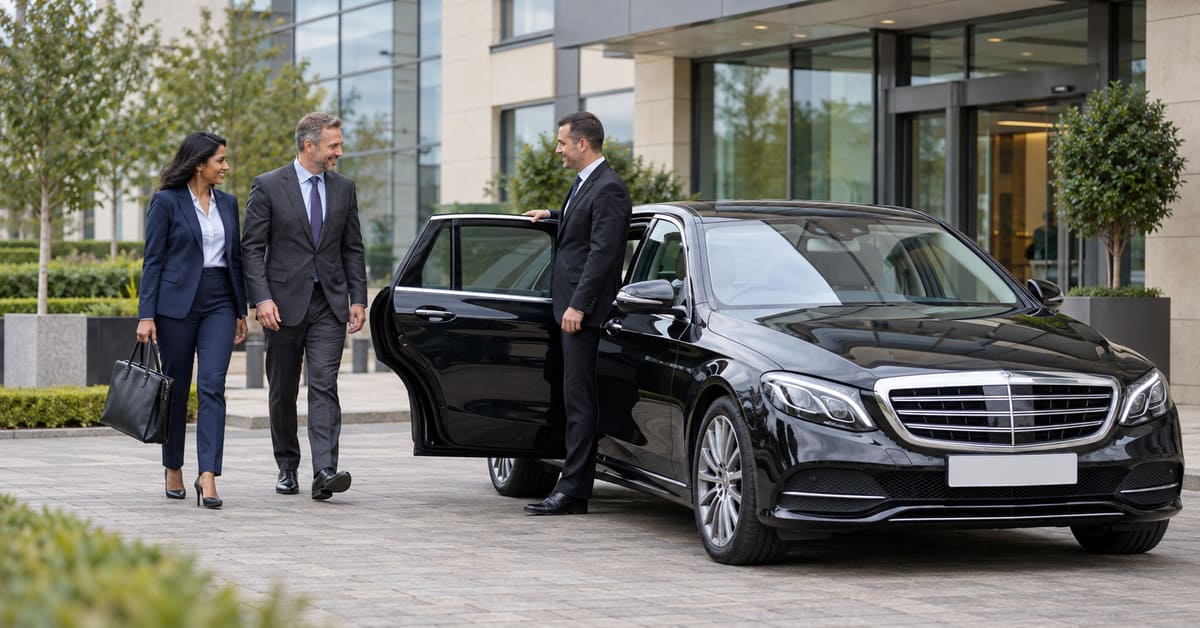
Companies choose private hire cars for important business trips because the journey can affect the meeting that follows. A missed connection, a difficult arrival or an employee exhausted from driving can disrupt a carefully planned day. Pre-booked transport gives the business greater control over those practical details.
For UK companies arranging a client presentation, board meeting or airport transfer, the value lies in having transport organised around the appointment. Here are the main reasons that make a difference.
Arrival Times Built Around Business Commitments
An important appointment needs a travel plan that works backwards from the required arrival time. That means allowing for traffic, finding the correct entrance and leaving enough time to settle in before the meeting starts.
A private hire booking lets the organiser specify the destination and arrival requirements in advance. This is particularly useful for business parks, rural offices and venues where the postcode alone may lead to the wrong entrance.
Britannia Cars monitors traffic and road conditions as part of its journey planning services. No road journey is immune to delays, but advance planning removes avoidable uncertainty, such as searching for parking or arranging the final leg after reaching a station.
Airport Transfers That Account for Flight Changes
Business flights create several moving parts. The scheduled landing time, time spent collecting luggage and the onward meeting may all affect the pickup arrangement. Leaving ground transport undecided adds another task when the traveller has just arrived.
Britannia Cars’ airport transfer service includes real-time flight tracking, fixed fares and meet-and-greet arrangements. These features give a company a practical way to organise the connection between the airport and the next appointment.
For the person booking, the useful detail is how the handover works. Providing the flight number, passenger contact details and destination helps establish a clear arrival plan. Waiting allowances and arrangements for substantial delays should be confirmed when booking.
Time to Prepare Before the Meeting
Driving requires attention that cannot be shared with reviewing a presentation or reading briefing notes. Travelling as a passenger creates an opportunity to prepare, provided the journey and working conditions are suitable.
Britannia Cars’ corporate travel service includes Wi-Fi and charging facilities. For a business traveller, these can make it easier to check an agenda, review documents or contact colleagues before arrival.
The benefit also includes the choice to rest. After an early departure or a demanding day, a quiet journey may be more useful than another hour of work. A private vehicle offers fewer distractions, although sensitive conversations still require discretion because the driver is present.
A Considered Welcome for Clients and Guests
When a company arranges a visitor’s transport, the experience becomes part of its hospitality. Clear collection instructions and a properly organised journey show that someone has thought about the guest’s arrival.
This matters when a client is unfamiliar with the area or visiting several company locations. They can focus on the purpose of the visit without working out local connections or navigating an unfamiliar route.
The strongest impression comes from practical consideration. Choosing sufficient luggage space, checking the preferred drop-off point and communicating the itinerary can make a guest feel expected and well looked after before the meeting begins.
Vehicles and Routes Suited to the Whole Team
A suitable vehicle depends on who is travelling and what they are carrying. A solo executive, a small project team and visitors with large suitcases have different requirements.
The Britannia Cars fleet includes standard cars, executive saloons and people carriers, with vehicle availability and luggage arrangements confirmed at booking. That choice allows an organiser to match the booking to the actual journey.
For colleagues attending the same appointment, travelling together can simplify arrival coordination. However, passenger capacity should always be considered alongside luggage and equipment. A vehicle with enough seats may still be unsuitable for everyone’s bags.
Sharing every planned stop also helps the operator assess the complete itinerary, including the return journey.
Clearer Costs and Less Expense Administration
The fare is only one part of the decision. A company may also be weighing parking charges, mileage claims and the staff time involved in organising several separate journeys. Private hire can offer good value where those practical costs are significant.
Regular business travel also creates paperwork. Britannia Cars’ corporate account arrangements include monthly invoices, journey logs and cost-centre allocation. These features can help finance teams assign spending to the appropriate department and reconcile journeys more easily.
The financial case should still be assessed for each trip. Confirm what the quotation includes, particularly waiting, additional stops and changes to the agreed route. Clear booking terms make budgeting more useful than a headline price alone.
Support When the Working Day Changes
Meetings overrun, venues change and return journeys sometimes need adjusting. For the organiser, having someone to contact is valuable when the original itinerary no longer fits.
Britannia Cars provides 24/7 booking support. A defined contact point gives the traveller or assistant a route for requesting changes and checking what is possible.
Flexibility works best with early communication. An amended pickup depends on availability and the booking terms, so changes should be agreed as soon as they become known. This is especially useful when several passengers or appointments are involved.
Driver and Vehicle Standards That Can Be Checked
Important trips also call for a provider the company can assess beforehand. Driver checks, insurance and vehicle condition give the organiser concrete standards to review when selecting transport.
Britannia Cars’ published service standards include DBS-checked drivers and private hire insurance. Businesses can discuss these details with the operator as part of their booking process.
A booked driver also means an employee does not have to take responsibility for driving home after a full day of meetings.
Frequently Asked Questions
When is private hire most useful for a business trip?
It is particularly useful for time-sensitive meetings, airport connections, client visits and destinations with awkward onward connections. The strongest case is where transport problems could materially affect the day’s purpose.
Can a company book transport for visiting clients?
Yes. Share the guest’s name, contact details, collection point and itinerary when arranging the journey. Confirm how the guest will identify the driver and receive pickup instructions.
Are private hire cars suitable for business groups?
Yes, subject to vehicle availability. Confirm the number of passengers, suitcases and any equipment so the operator can recommend a suitable people carrier or coordinated vehicles.
Does a corporate account help with expense management?
It can. Britannia Cars lists monthly invoicing, journey records and cost-centre allocation, which can reduce the need to reconcile separate travel receipts. Confirm the account arrangements before regular bookings begin.