
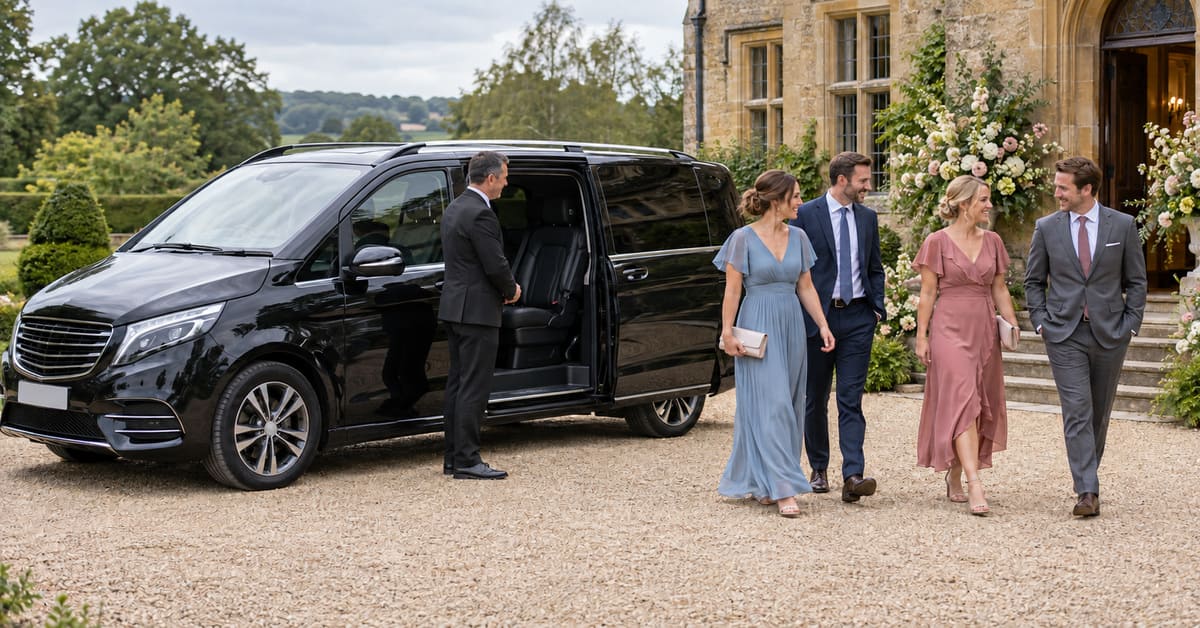
Reliable wedding transport protects something you cannot replace: time on the day itself. If a car arrives late, passengers cannot fit comfortably or nobody has organised the evening collection, the effects can reach well beyond the journey. Photographs become rushed, guests wait and the couple end up solving problems when they should be celebrating.
That makes transport an early planning decision. The right arrangement connects your venues, supports the people travelling and gives everyone a clear plan. Here is why getting it right matters, and what to look for before booking.
It protects the timing of your whole wedding
Your ceremony, photographs and wedding breakfast depend on people being in the right place. A delay at the first collection can reduce the time available for everything that follows.
Start with the arrival time agreed with your venue and ceremony team. Ask whether you need to arrive earlier for a meeting with the registrar or other preparations. Then work backwards, allowing for the drive, boarding, getting out and reaching the ceremony room.
For example, a journey estimated at 25 minutes needs more than a 25-minute gap in the schedule. Gathering passengers, arranging a dress and walking from the drop-off point all take time. Agree a sensible traffic allowance for your route, too.
Reliable planning means checking the actual journey at the relevant time of day and making sure the driver has your required arrival time, not just the ceremony start time.
It makes journeys between venues manageable
A wedding involving separate preparation addresses, a ceremony venue and a reception needs more coordination than a single journey. The important question is whether each vehicle can complete its assigned trips within the available time.
If one car will collect the wedding party and then return for the couple, include the empty return journey and boarding time in your calculations. Reusing a vehicle only works when the full sequence fits comfortably.
Give the driver the correct entrance for every location. A countryside venue may have several access points, while a town-centre venue may need a specific drop-off arrangement.
For relatives travelling together, Britannia Cars offers group hire and MPV transfers for up to seven passengers. Confirm the passenger and luggage combination before deciding how many journeys you need.
It takes responsibility off your shoulders
Transport questions can quickly become your questions: Where is the car? Which entrance should the driver use? Who is travelling with whom?
Agreeing these details beforehand gives you space to enjoy the morning. Prepare one itinerary with collection addresses, passenger names, departure times and contact numbers. Nominate a trusted person to handle calls on the day, and share their details with the transport provider.
Britannia Cars’ wedding chauffeur service covers bridal party travel through to the couple’s departure, with formally dressed chauffeurs and white ribbon decoration available on request. Discuss the journeys you need so the booking reflects your celebration.
It helps everyone travel comfortably
A vehicle can have enough seats yet still be unsuitable for the journey. Wedding outfits, bouquets, overnight bags and mobility aids all affect the space passengers need.
Consider door openings, seat height and room to sit without crushing clothing. For anyone with reduced mobility, discuss their specific boarding and seating requirements directly. Space for a folded wheelchair does not establish that someone can travel while remaining in their wheelchair.
If children are travelling, agree suitable child-seat arrangements before booking. Include those seats when discussing the vehicle layout.
The Britannia Cars fleet includes saloons and people carriers, with availability and passenger and luggage arrangements confirmed when booking. Describe what everyone will bring so the team can help you identify a suitable option.
It gives you a plan when circumstances change
Ask how the provider will respond if roadworks, poor weather or a vehicle problem affects your journey. A useful answer should explain the practical response and who will contact you.
Discuss alternative routes, breakdown arrangements and the process for updating collection times. Ask whether a replacement vehicle would meet the needs already agreed, particularly where accessibility or passenger capacity matters.
Share any venue restrictions and agree to a sheltered collection point where possible. If photographs run over, your nominated contact should know whom to call and whether the driver can wait. These conversations turn vague reassurance into arrangements you can actually use.
It helps you understand the real cost
Compare quotations against the same itinerary. A price for one transfer cannot tell you the cost of several collections, a photography stop and an evening return.
Request written confirmation of the vehicle, journeys, hire period and included waiting time. Ask about charges for extra stops, overtime, parking and changes to the schedule, alongside payment and cancellation terms.
This protects your budget and prevents disagreements about what was booked. If savings are needed, prioritise the journeys that keep the ceremony and reception running smoothly. A simpler vehicle arrangement with clear timings may serve your wedding better than a more elaborate plan with too little travel time.
It keeps the end of the evening organised
The final journey deserves the same attention as your arrival. Decide who needs transport back to accommodation and whether some guests need to leave earlier.
Give passengers a clear meeting point and collection time. Confirm the return date carefully if departure is after midnight, and arrange how luggage will reach the hotel.
When these details are settled, guests can make informed plans for the evening. You can enjoy your farewell without having to organise lifts, locate drivers or work out who is still waiting outside.
Frequently asked questions
When should we book wedding transport?
Begin enquiries once your date, ceremony time and venues are confirmed. Booking early gives you more opportunity to secure a suitable arrangement, especially if you need several vehicles or specific seating features.
Do we need to provide transport for every guest?
No. Prioritise people with essential roles, guests without their own arrangements and anyone needing additional support. Explain clearly which journeys you are providing so others can plan.
Can the wedding car stay for photographs?
Ask for photography time to be included in the booking. Confirm where the car can wait, how long it will remain and whether this affects the onward journey or price.
Is transport necessary when everything happens at one venue?
You may only need arrival and departure journeys. Check where you and your guests are getting ready and staying overnight before deciding what to book.