
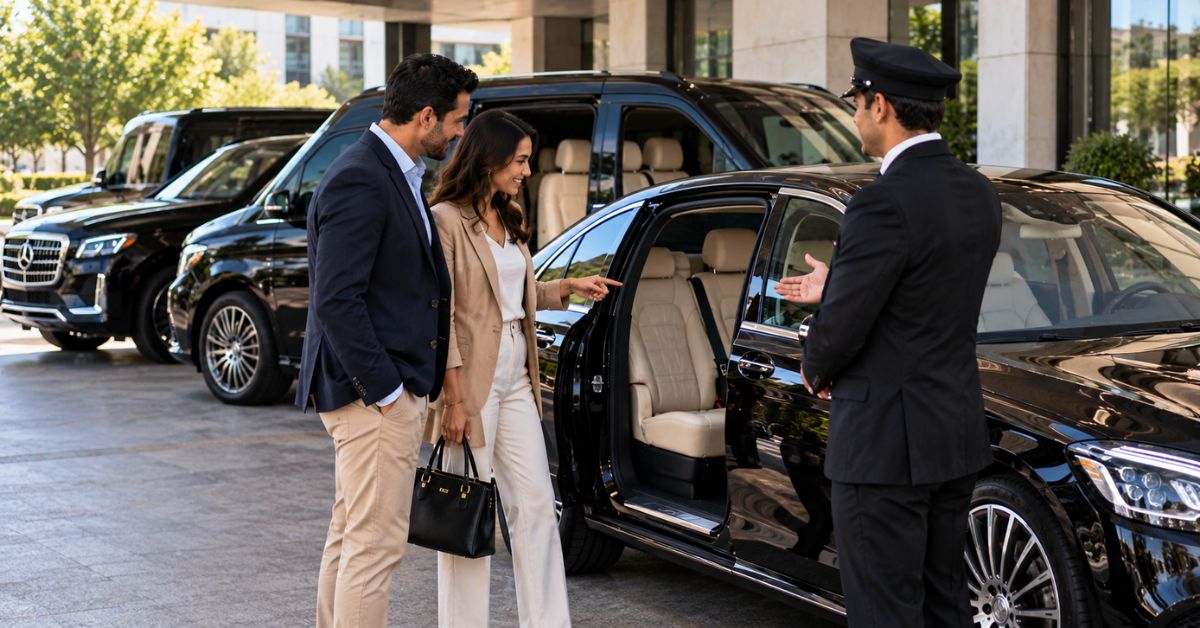
When you reserve a particular chauffeur-driven vehicle, the booking should explain exactly what you will receive. A model preference, a vehicle category and a confirmed car are different things. Before agreeing to the journey, establish which model is available, whether its features meet your needs and what happens if it becomes unavailable.
These checks matter whether you want room for airport luggage, a comfortable working space or a particular appearance for an event.
1. Establish Whether You Are Booking a Model or a Category
Start with one direct question: “Is this exact model confirmed, or am I requesting a vehicle from this category?”
A description such as “executive saloon” identifies a type of vehicle. It does not, by itself, promise a particular model, year or interior specification. Even a named model needs availability confirmation for your journey.
The Britannia Cars fleet includes executive and luxury saloons, standard cars and people carriers. The page states that availability, passenger and luggage arrangements, and final fares are confirmed when booking.
Ask for the model name to appear in the confirmation if it is essential. If the booking allows a comparable vehicle, clarify what “comparable” means for your requirements.
Britannia Cars’ booking terms also distinguish a request from an accepted reservation. Sending the form or discussing a car by telephone does not, on its own, confirm the booking.
2. Check the Version and Appearance That Matter to You
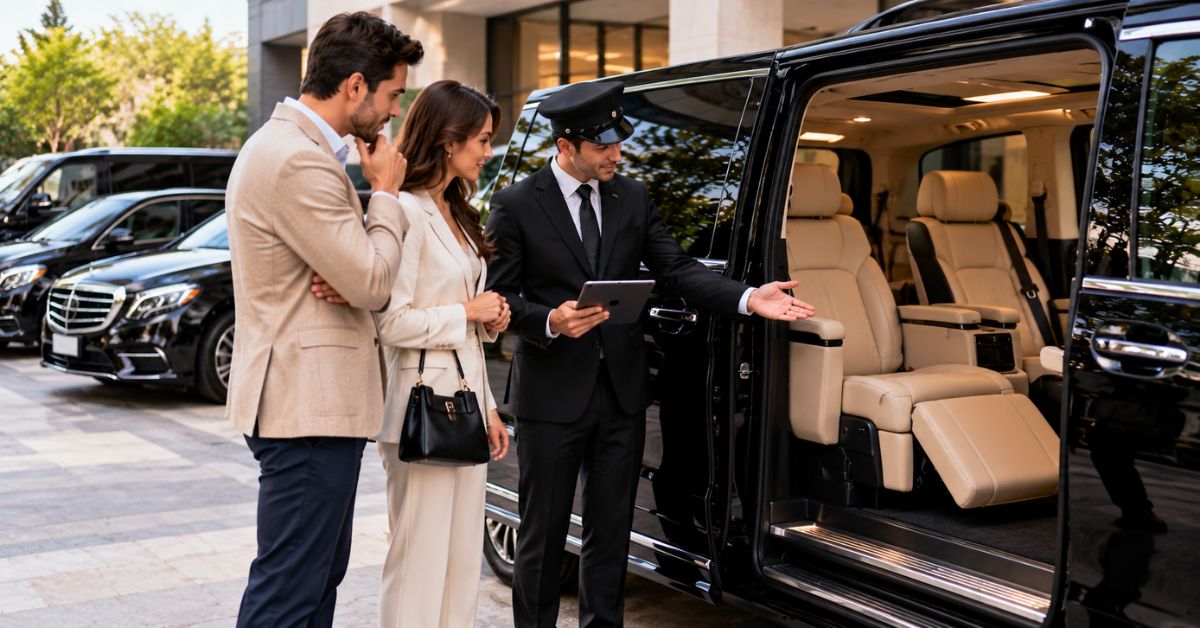
A model name may cover different ages, body styles and equipment packages. Ask about the version being allocated when a particular detail affects your decision.
For example, someone choosing a car for photographs may care about exterior colour and interior upholstery. Another passenger may need a longer cabin or a particular rear-seat arrangement. Explain the requirement rather than assuming a newer model automatically provides it.
Request recent photographs of the intended vehicle if its appearance is important. Britannia Cars identifies some fleet images as illustrations, so website pictures should not be treated as proof of the exact car arriving.
For wedding and event transport, confirm decoration separately. A photograph showing ribbons or flowers does not establish what your own booking includes.
3. Confirm Passenger Space and Luggage Together
Give the booking team your passenger count and a realistic luggage list at the same time. Asking whether a car seats your group leaves half the suitability check unanswered.
Include large suitcases, cabin bags, pushchairs, golf bags and anything unusually shaped. Dimensions are more useful than “one large item” when you are bringing bulky equipment.
Ask whether everything fits with every required passenger seat in use. A seating arrangement that creates extra storage may not work when the whole group travels.
The group hire service advertises vehicles for up to seven passengers, but your actual combination of people and belongings still needs checking. Specify whether everyone needs forward-facing seating or whether a particular passenger needs extra legroom. Do not leave those details until loading begins.
4. Verify Features in the Allocated Vehicle
Separate essential equipment from features you would simply enjoy. This helps the team assess suitability without treating every preference as equally important.
Useful questions include:
- Wi-Fi: Is it available in the assigned car, and are connection details provided?
- Charging: Which sockets are accessible from the passenger seats, and should you bring cables?
- Climate control: Can rear passengers adjust their own temperature?
- Seat functions: Which seats have the advertised adjustment or comfort features?
- Privacy: What glazing or other privacy features does this vehicle have?
Britannia Cars’ corporate travel service describes Wi-Fi and charging facilities. If you intend to work during the journey, confirm the practical setup for your booking. Having Wi-Fi available should not be treated as a promise of uninterrupted reception throughout the route.
Ask about device compatibility too. A charging socket is only useful if your equipment can connect to it.
5. Discuss Child Seats and Access Requirements Early
If children are travelling, provide their ages and the information needed to select suitable restraints. Confirm whether you are bringing seats or asking for them to be supplied, and whether the proposed vehicle can accommodate them alongside the other passengers.
For anyone who finds entering a car difficult, describe the practical requirement: a manageable step, space to turn or room for a folded mobility aid.
Storing a folded wheelchair is different from transporting someone seated in their wheelchair. Ask explicitly about the arrangement required. Do not infer accessibility from the size of an MPV or the width of its doors.
6. Agree What Happens If the Vehicle Changes
Ask how you would be contacted if the selected vehicle became unavailable. Establish which alternatives would be acceptable and which would prevent the journey from working.
For example, a larger replacement may offer more luggage space but have a higher step that a passenger cannot manage. A more luxurious saloon may still be unsuitable for a group needing additional seats.
Discuss whether your approval would be sought before substitution, how any price difference would be handled and which cancellation arrangements would apply. These are questions to settle with the booking team, rather than benefits to assume.
Keep essential requirements separate from optional preferences in your booking notes. That gives the team a clear basis for assessing any proposed replacement.
7. Check the Price Against the Confirmed Specification
Request a final quote covering the chosen vehicle and agreed extras. A starting price on a fleet page is not a personalised quote for every route or specification.
Check whether charges for waiting, parking, additional stops or requested equipment are included where relevant. For a return booking, establish whether the price covers both journeys.
Read the confirmation alongside your original request. It should identify the accepted vehicle arrangement, essential features, passenger and luggage requirements, journey details and applicable conditions. Raise omissions before relying on the reservation.
Frequently Asked Questions
Can I request a specific vehicle at short notice?
Yes, but availability needs checking. Contact the team directly and explain whether the model is essential or whether suitable alternatives would work.
Will the same vehicle collect me on the return journey?
Ask explicitly. A return reservation should clarify whether both legs require the same vehicle or simply the same agreed specification.
When should I ask for the vehicle registration?
Ask when identification details will be shared. If the registration is needed for venue access, provide the venue’s deadline during booking.
Can I change the passenger count after requesting a car?
Contact the team promptly. Extra passengers can affect the vehicle choice, luggage arrangement and quote, so obtain updated confirmation.